Moisture and problem-area inspection
We trace the likely moisture pathway and check adjacent materials so the scope matches the real extent of growth, not just the visible staining.
Serving Grand Rapids, Ohio & surrounding areas
Get a clear plan to stop the moisture, remove the mold safely, and restore healthy indoor air, with prompt scheduling for homes and businesses in Grand Rapids.
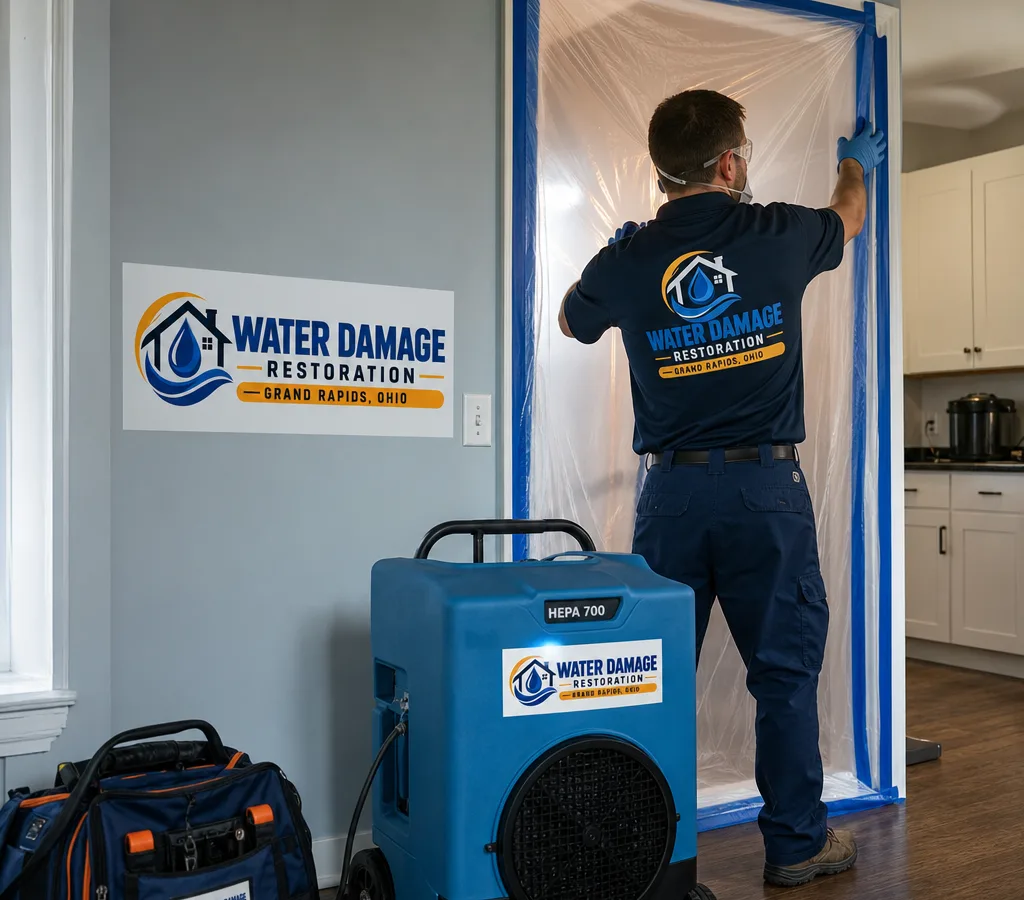
Grand Rapids mold remediation works when it does two things: removes contaminated materials safely and fixes the moisture conditions that let mold grow in the first place. If you only treat what you can see, it often returns.
Our team at Water Damage Restoration Grand Rapids handles mold remediation with a practical, inspection-first approach. We identify where moisture is getting in—leaks, humidity, prior flooding, poor ventilation, damp basements and crawlspaces—isolate the work area to prevent cross-contamination, and use professional HEPA filtration to capture airborne spores during cleanup.
Grand Rapids sits along the Maumee River, and homes near waterways or with lower-grade basements can be more sensitive to damp conditions after heavy rain events. Even without obvious water on the floor, elevated moisture in framing, drywall, or insulation can keep mold active behind walls and under flooring. The right remediation plan is based on what is actually wet, what is actually contaminated, and how air moves through the building.
We trace the likely moisture pathway and check adjacent materials so the scope matches the real extent of growth, not just the visible staining.
We isolate affected rooms with poly sheeting and maintain pressure control so spores and dust stay inside the work zone.
HEPA air scrubbers and HEPA vacuuming reduce airborne particulate during removal and cleanup, especially in occupied homes and active businesses.
When drywall, insulation, carpet pad, or other porous materials are contaminated, removal is often the reliable option for long-term results.
Non-porous and semi-porous surfaces can often be cleaned and treated after removal work, based on condition and material type.
Remediation holds up when moisture is controlled. We outline what needs to dry, what needs repair, and what habits or ventilation changes help prevent recurrence.
A big part of professional mold remediation is controlling where air, dust, and debris can travel.
We typically start by separating the affected area from the rest of the property using sealed plastic barriers and controlled entry. If the situation calls for it, we run negative air so airflow moves into the containment area instead of out into hallways, adjacent rooms, or shared spaces.
Then we remove contaminated porous materials when needed, clean remaining structural surfaces using HEPA methods, and keep filtration running during the messy parts of the work. This matters in older homes with lots of air pathways behind baseboards and around wall penetrations, and in commercial spaces where foot traffic can move particles quickly.
If your concern started after a leak, a sump issue, or a storm-related water intrusion, it helps to address that underlying source early. Moisture control and drying steps often overlap with what prevents mold from returning.
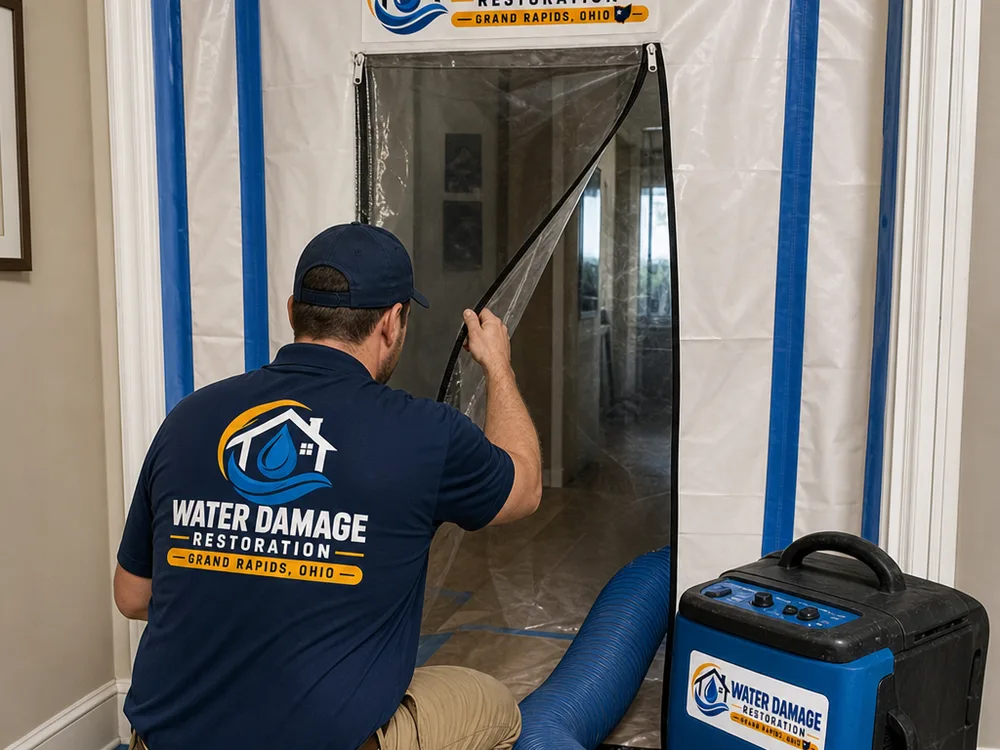
A controlled sequence from inspection and containment through material removal, cleaning, drying, and final turnover.
We look at the visible growth, ask about the building history—leaks, humidity, and past flooding—and determine where the work should start and stop. The goal is a written scope that matches the conditions on site.
We protect clean areas with barriers and set up HEPA filtration. When the situation warrants, we establish negative air so airborne debris stays controlled during demolition and cleaning.
Drywall, insulation, carpet pad, ceiling tiles, and other porous items can hold mold deep inside. If they are impacted, removal is often required to achieve a reliable outcome.
We HEPA vacuum and clean remaining structural surfaces, then apply appropriate antimicrobial products based on material type and site conditions.
We verify what still needs drying and what needs repair. That might include addressing a plumbing leak, improving ventilation, correcting drainage, or controlling indoor humidity.
We leave the area clean and explain what was removed, what was cleaned, and what to watch for. If rebuilding is needed, we can coordinate timing so the space can be put back into use as soon as it makes sense.
Grand Rapids mold remediation typically ranges from about $1,200 to $6,500+ for most residential projects, depending on how much material has to be removed and how hard it is to access the affected area. A small, contained spot with minimal removal may fall near the low end, while multi-room growth with drywall and insulation removal, heavy containment, and extended air filtration can land higher.
Final pricing depends on the square footage and severity, where the mold is located—attic, crawlspace, or behind cabinets—how much demolition is required, and what moisture problem has to be corrected. The exact cost is confirmed after an on-site inspection and a written scope.
“They explained what had to come out and why, then set up containment that kept the rest of the house clean. The work moved fast and the musty smell was gone once everything dried out.”
“We had mold in a back office and needed to keep the business open. The crew isolated the area, ran air machines, and kept the space tidy so we could keep operating.”
Scheduling depends on the size and urgency of the job, but we prioritize active moisture problems and situations where the affected area is growing or impacting indoor air. If you have a recent leak, damp basement conditions near the Maumee River corridor, or visible growth spreading, it is worth getting an inspection on the calendar quickly so the scope is based on current conditions.
Many projects can be completed while you remain in the home, as long as the affected area can be fully contained and the work plan accounts for airflow, HVAC returns, and foot traffic. If contamination is widespread, involves sensitive occupants, or affects key living areas like bedrooms, we will tell you what precautions make sense before work starts.
Sampling is not required for every job, because visible growth and moisture evidence can be enough to define the remediation scope. When testing is useful, it is usually to document conditions for a real estate situation, to clarify an unclear source, or to confirm whether an area that looks clean is actually impacted. We can discuss whether sampling helps your specific situation during the inspection.
Mold returns when moisture returns, or when contaminated porous materials were left in place. Common causes include slow plumbing leaks, damp basements and crawlspaces, poorly vented bathrooms, roof or flashing leaks, and humidity that stays high for long periods. A remediation plan should pair removal and cleaning with a practical moisture-control fix.
If mold has colonized porous materials, removal is often the dependable option because those materials cannot be fully cleaned through their depth. We minimize demolition where it is reasonable, but we will recommend removal when it is the best way to prevent recurring odor, staining, and regrowth.
Many small to mid-sized jobs take 1 to 3 days of remediation work, with additional time if drying, demolition, or rebuilding is needed. Containment setup and careful cleanup add time, but they are part of what keeps the rest of the property protected during the work.
If you are seeing visible growth or smelling a persistent musty odor, the next step is an on-site inspection so you get a written scope, clear pricing, and a plan that addresses both the mold and the moisture behind it.
Call for Emergency HelpTell us what you are noticing and where it is happening. We will schedule an inspection, explain what needs to be removed versus cleaned, and outline the steps to keep mold from coming back.