Containment built for the situation
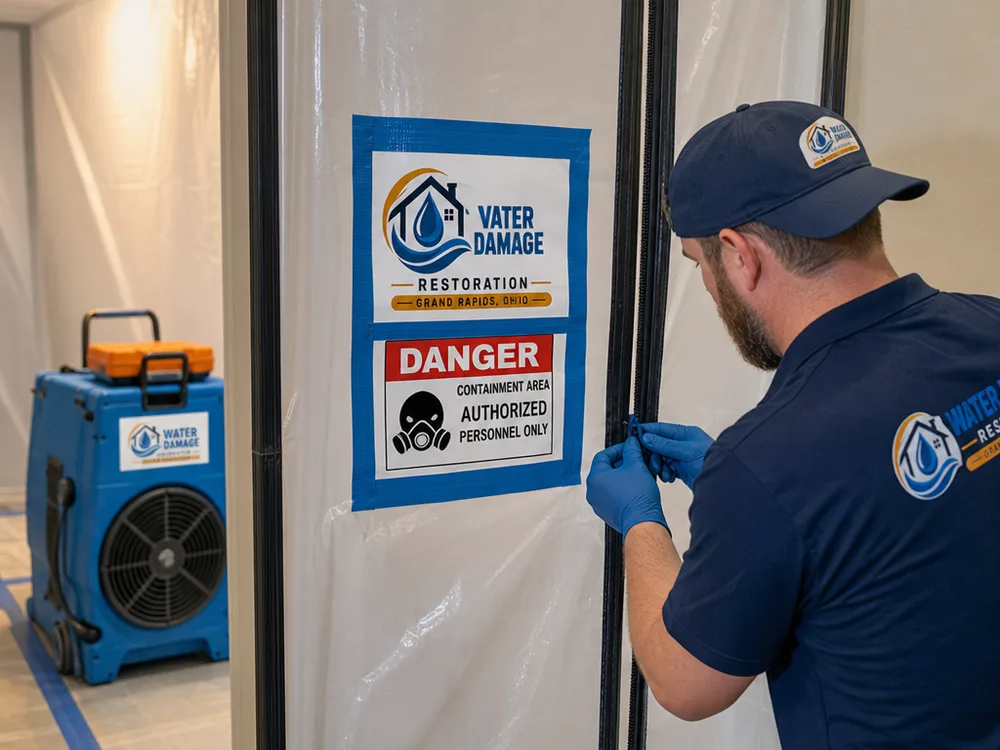
We isolate the work area using plastic sheeting, negative air when needed, and controlled entry so spores stay in the contained zone instead of traveling through the home.
Serving Grand Rapids, Ohio & surrounding areas
If you are seeing fuzzy growth, staining, or a persistent musty smell, our team isolates the area, removes mold safely, and helps correct the moisture that caused it so you can get back to normal living.
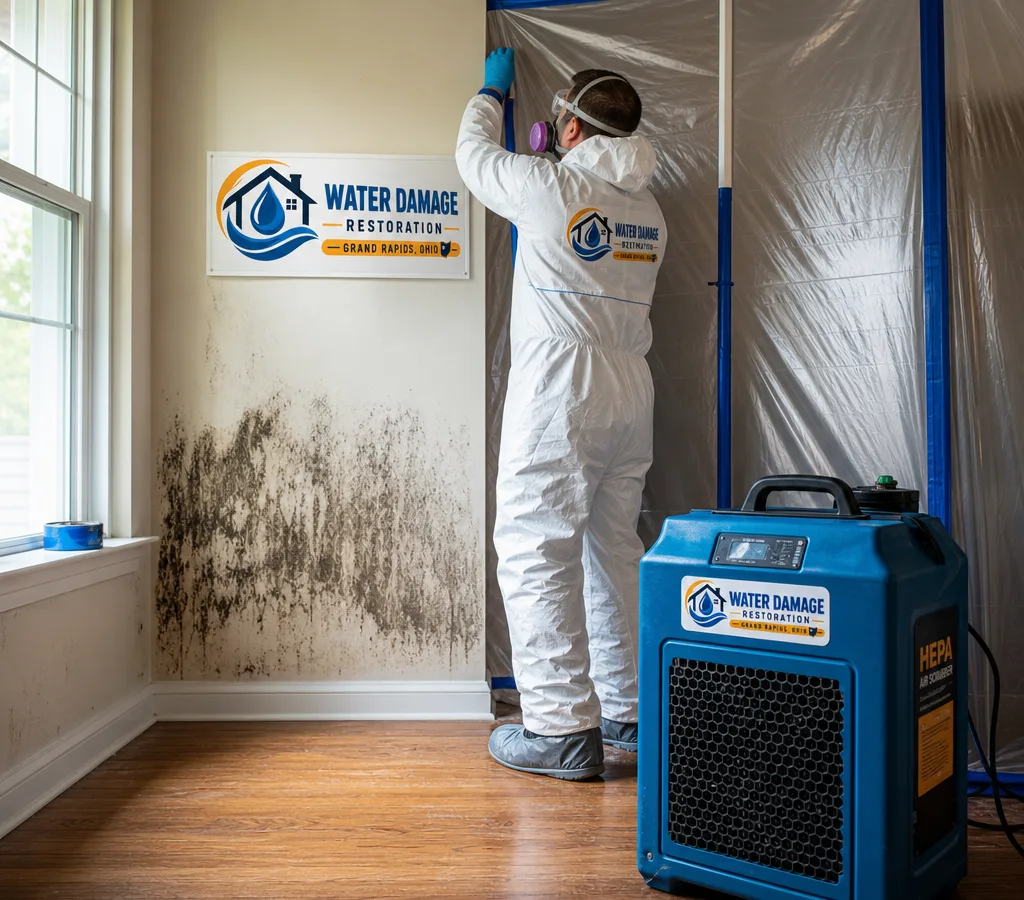
When you search for mold removal Grand Rapids homeowners trust, you are usually dealing with two problems at once: visible growth and the damp conditions that let it spread. Our approach addresses both. We begin by identifying where moisture is coming from—a leak, humidity, past water intrusion, or condensation—then we contain the affected space so spores are not pushed into clean areas.
Mold is common in places with limited airflow or frequent dampness, like basements, crawlspaces, around window frames, behind vanities, and near HVAC supply and return pathways. Even if the growth looks small, disturbance during cleanup can release spores. That is why proper containment, filtration, and careful material handling matter as much as the wipe-down itself.
Water Damage Restoration Grand Rapids provides Grand Rapids mold removal for residential spaces and light commercial areas. If you are also dealing with wet building materials, standing water, or an active leak, drying and moisture correction should happen before or alongside remediation.
We isolate the work area using plastic sheeting, negative air when needed, and controlled entry so spores stay in the contained zone instead of traveling through the home.
We use HEPA air scrubbers and HEPA vacuuming on surfaces to capture fine particulate, then clean remaining residue using methods appropriate for the material.
Drywall, insulation, and other porous materials may need to be removed when contamination penetrates below the surface. We explain what can stay and what should go.
Musty odor usually points to hidden moisture. We document likely sources and practical next steps to reduce the chance of recurrence.
You get a written plan that outlines the affected areas, the protection measures, what will be removed, what will be cleaned, and how the space will be left at completion.
A proper mold remediation job is more than spraying a chemical and painting over stains. Most projects include:
Homes around the Maumee River corridor and other low-lying areas can have basements and crawlspaces that swing in humidity through the year. When outdoor humidity climbs, those spaces can become the first place mold shows up. If you have recurring basement odor, we focus on airflow and moisture entry points as part of the plan, not as an afterthought.
A controlled sequence from assessment and containment through cleaning, moisture correction, and final walkthrough.
Tell us what you are seeing and smelling, where it is, and whether there was a recent leak or water event. We schedule an on-site assessment and explain how to prepare the area.
We evaluate affected materials and the likely moisture source. You receive a clear scope of work so you know what will be removed, what will be cleaned, and what areas will be protected.
We set barriers, establish controlled access, and stage HEPA filtration. This step is what keeps cleanup from turning into whole-house contamination.
We remove impacted porous materials when appropriate, HEPA vacuum remaining surfaces, and clean using methods matched to wood, masonry, or other substrates.
If the area is damp, we address drying and document practical corrections, such as leak repair coordination, ventilation improvements, or dehumidification needs.
We detail-clean the work zone, remove containment, and review results with you. If you plan to rebuild finishes, we explain what should happen next so the area stays dry.
Mold removal in Grand Rapids typically ranges from about $600 to $3,500 for many residential jobs, with small, contained areas on the low end and multi-room or basement projects with demolition and heavy filtration on the higher end. A limited spot cleanup may run $600 to $1,200, while larger remediation with removal of drywall or insulation often falls around $1,500 to $3,500+.
Your final price depends on the size of the affected area, what materials are impacted—porous versus non-porous—access to the space, how much containment is required, and whether active moisture or wet materials must be dried first. Exact pricing is confirmed after the on-site inspection and written scope.
“We thought it was just a smell in the basement, but they found mold behind a finished wall and explained why it kept coming back. The containment was clean, and the house never felt dusty after the work.”
“They walked us through what needed to be removed versus what could be cleaned, and the scope matched what happened on site. The musty odor was gone once the area was dried and cleaned properly.”
Start time depends on current scheduling and the urgency of the situation, but mold concerns are typically prioritized because growth can spread when moisture is present. If there is active water intrusion or damp materials, the fastest path is to assess, contain, and begin drying and remediation steps in the right order so cleanup is not undone by lingering moisture.
Many mold remediation projects can be completed while you remain in the home, as long as the work area can be isolated and there is safe access for technicians. If the affected area is in a high-traffic space like a main hallway, a bedroom you must use, or near HVAC returns, we will explain what is safest based on containment needs and air movement in the home.
Basements, crawlspaces, bathrooms, and areas around windows are common because they combine moisture with limited airflow. In Northwest Ohio, humidity swings can make below-grade spaces feel damp even without a recent leak, so we pay close attention to condensation points, insulation gaps, and any signs of past water intrusion.
Drywall often needs to be removed when mold penetrates the paper face or the material is damp or soft, because it is porous and difficult to clean thoroughly. In some cases where staining is superficial and the drywall is confirmed dry and structurally sound, limited cleaning may be possible, but we will recommend replacement when that is the more reliable and safer option.
Mold can return if moisture returns, so the goal is to remove contamination and reduce the conditions that let it grow. We focus on containment and cleaning, and we also document the likely moisture driver, such as a leak, poor ventilation, or high basement humidity, so you have a clear plan to prevent recurrence.
Sampling is not required for every project because visible growth and moisture damage can often be addressed with a clear remediation plan, but testing can be useful when the source is unclear or there are health concerns. If you want sampling, we can discuss when it helps and how results should be interpreted, since a lab report does not replace fixing the moisture problem.
Describe what you are seeing and where it is showing up, and we will schedule an on-site assessment, explain the scope, and outline the containment and removal steps your home needs.